
7 Halal Passive Income Ideas for Muslims in 2026
Kimia Editorial
Kimia Finance Team
The phrase "passive income" has become a cliché in personal finance — but the underlying concept is deeply Islamic. Using your wealth to generate further wealth through legitimate means is explicitly permitted in the Quran and practiced by the Sahabah. The Prophet ﷺ himself engaged in trade partnerships (Mudarabah) and invested wealth in productive assets. If you are just starting your Shariah-compliant wealth journey, our 5 strategies for wealth building is a great place to begin.
The constraint is clear: returns must come from real economic activity, shared risk, and lawful enterprise — not from interest (Riba) or prohibited industries. Within those constraints, there is more space for Halal passive income than most Muslims realize.
Each option below includes a realistic risk level and minimum starting capital, because the right strategy depends entirely on where you are, not just where you want to go.
1. Dividend Stocks in Shariah-Compliant Companies
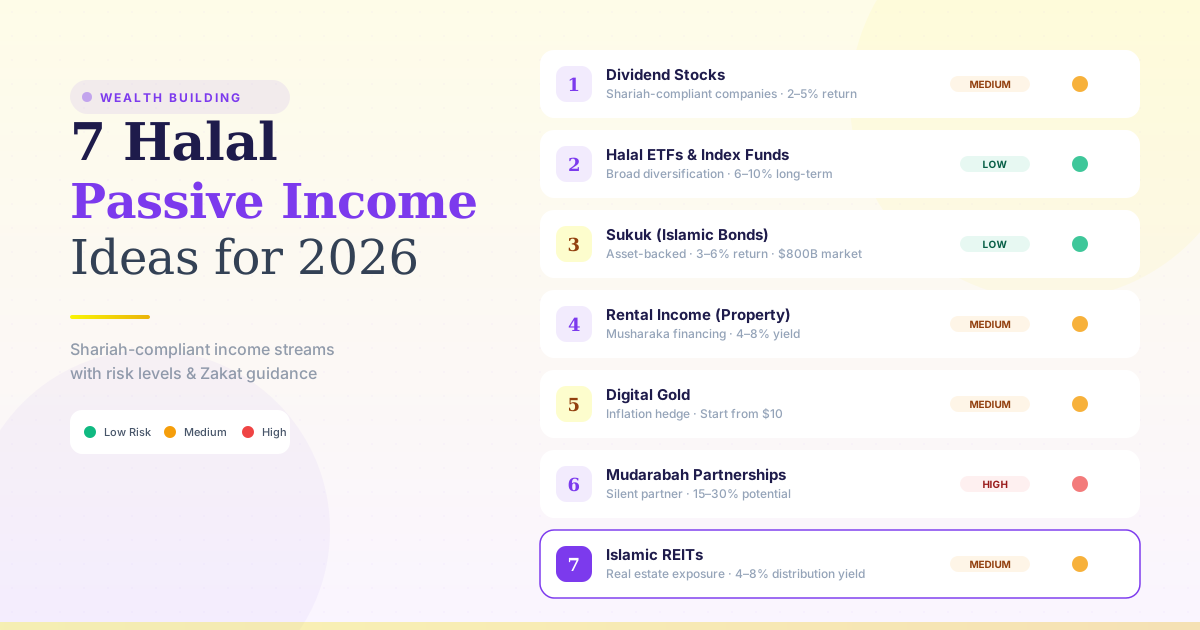
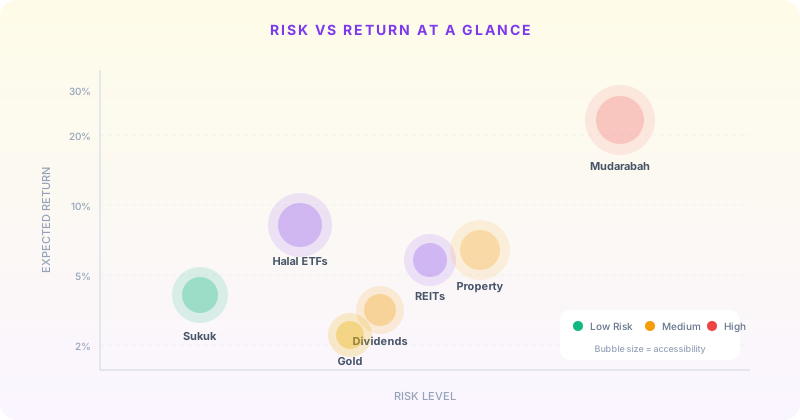
Risk: Medium | Minimum Investment: ~$200 | Expected Return: 2–5% annually
Publicly traded companies pay dividends — a share of profits — to their shareholders. When the company itself is Shariah-compliant (no significant involvement in alcohol, tobacco, gambling, weapons, adult entertainment, or conventional finance), these dividends are Halal income.
Use a Shariah screening service (Zoya, Islamicly, Musaffa) or a Halal ETF that distributes dividends. Most major Islamic index providers (Dow Jones Islamic Market Index, MSCI Islamic Index Series) publish regularly updated compliance lists. Reinvesting dividends compounds your returns over time through the power of profit upon profit.
Zakat note: Dividends received are income. Your share of undistributed profits in the company is part of your investment value — include the market value of your holdings in your annual Zakatable wealth calculation.
2. Halal ETFs and Index Funds
Risk: Low–Medium | Minimum Investment: ~$50–$100 | Expected Return: 6–10% annually (long-term)
Shariah-compliant ETFs track Islamic indexes and automatically filter non-compliant companies. They require minimal active management, provide broad diversification across hundreds of companies, and are highly liquid — you can buy or sell any trading day. Returns come from capital appreciation and dividends — both Halal when the underlying assets are compliant.
Popular options include iShares MSCI World Islamic ETF (ISWD), SP Funds S&P 500 Sharia Industry Exclusions ETF (SPUS), Wahed FTSE USA Shariah ETF (HLAL), and various regional Islamic ETFs. Availability varies by country — use a brokerage that supports your local market.
Zakat note: Include the current market value of your ETF holdings as Zakatable wealth. Most scholars treat ETFs like direct stock ownership — Zakat on the proportional value of compliant underlying assets.
3. Sukuk (Islamic Bonds)
Risk: Low | Minimum Investment: ~$1,000 (retail) or $200,000 (wholesale) | Expected Return: 3–6% annually
Sukuk are asset-backed instruments that represent ownership in tangible assets rather than debt obligations. Returns come from the performance of the underlying asset — rental income, profit sharing, or commodity trade — not from interest. This is structurally different from conventional bonds: Sukuk holders share in the actual asset's performance. For a deeper comparison, see our article on Sukuk vs. conventional bonds.
Sukuk range from government-issued (Malaysia, UAE, Saudi Arabia) to corporate. They typically offer lower volatility than equities with modest but predictable returns, making them suitable for the fixed-income portion of a portfolio. Retail Sukuk products with lower minimums are expanding rapidly in Malaysia and the Gulf.
"Wealth that works for others while you sleep is only virtuous if it creates real value, not artificial returns from paper obligations."
Zakat note: Sukuk are treated similarly to business ownership. The underlying asset value and any accumulated profit distributions are included in Zakatable wealth at the Hawl (annual) date.
4. Rental Income from Property
Risk: Medium | Minimum Investment: 10–20% down payment (varies by country) | Expected Return: 4–8% net yield
Renting out property — residential or commercial — is among the most time-tested Halal passive income streams. The property must itself be used for Halal purposes (not a bar, casino, etc.), but this eliminates very few real estate opportunities in practice. Rental income from Halal tenants using property for Halal purposes is unambiguously permissible.
The main challenge is the down payment and avoiding Riba-based mortgages. Islamic home finance products — Diminishing Musharaka (shared ownership that you buy out over time), Ijarah Muntahia Bittamleek (lease-to-own) — allow property acquisition without conventional interest-bearing loans. These products are available through Islamic banks in the UK, USA, Canada, Malaysia, and Gulf countries.
Zakat note: Property held for investment (rental purposes) is subject to Zakat on its rental income. The property value itself is generally not Zakatable if it is not held for resale — consult your Mufti for your specific situation.
5. Digital Gold Holdings
Risk: Medium | Minimum Investment: ~$10 | Expected Return: inflation hedge, not yield
Gold does not pay dividends, and this needs to be stated plainly: holding gold is wealth preservation, not passive income generation. However, it is a critical component of a Halal financial strategy because it eliminates the need for interest-bearing savings accounts as an inflation hedge.
Digital gold platforms (HelloGold, Orion Metal Exchange, various Islamic bank products) allow fractional ownership with full liquidity and no storage costs. Over 5–10 year horizons, gold has historically preserved purchasing power against currency debasement. Some Islamic banks offer Wakala-based gold accounts that add a small Halal profit component on top of the gold appreciation.
Zakat note: Gold above the Nisab threshold (87.48g) is Zakatable at 2.5% of its current market value — regardless of whether it is physical or digital. This is one of the most clearly established Zakat obligations.
6. Mudarabah-Based Business Partnerships
Risk: Medium–High | Minimum Investment: Negotiable | Expected Return: 15–30% (if successful)
If you have capital but lack time, and someone else has skills but lacks capital — Mudarabah is designed for you. As the silent partner (Rabb al-Mal), you provide financing. The active partner (Mudarib) manages the business. Profits are split according to a pre-agreed ratio; losses (beyond the effort of the Mudarib) fall on the capital provider. The Mudarib loses their time and effort, but not money they never had. The AAOIFI Shariah Standards provide the internationally recognized framework for structuring these partnerships.
This can be as informal as financing a family member's business or as formal as investing in an Islamic venture capital fund or profit-sharing deposit account at an Islamic bank. The key requirements: no guaranteed return, clear and agreed profit-sharing ratio documented in writing, and a Halal business activity. Never enter a Mudarabah without a written contract.
Zakat note: Capital invested in a Mudarabah is Zakatable. Include both the principal and your share of any accumulated profits at the Hawl date. If the business has not yet distributed profits, consult your Mufti on valuation methodology.
7. Islamic REITs (Real Estate Investment Trusts)
Risk: Medium | Minimum Investment: ~$100–$500 | Expected Return: 4–8% distribution yield
Shariah-compliant REITs pool investor capital to buy income-generating properties, then distribute rental income to investors quarterly or annually. This gives you real estate exposure without the capital requirement of direct ownership, without hands-on management, and without conventional debt financing in the fund structure.
Islamic REITs are well-established and regulated in Malaysia (Al-Aqar Healthcare REIT, Axis REIT), Saudi Arabia (Riyad REIT, Musharaka REIT), and increasingly in the UAE and UK. Some mainstream REIT funds include Shariah-compliant sub-funds. Always look for explicit Shariah supervisory board certification and annual Shariah audit reports before investing.
Zakat note: REIT units are treated like shares. Include their current market value in your Zakatable wealth, plus your share of any undistributed rental income. Most Islamic REITs in Malaysia and Saudi Arabia publish annual Zakat guidance for investors.
Building Your Halal Passive Income Stack
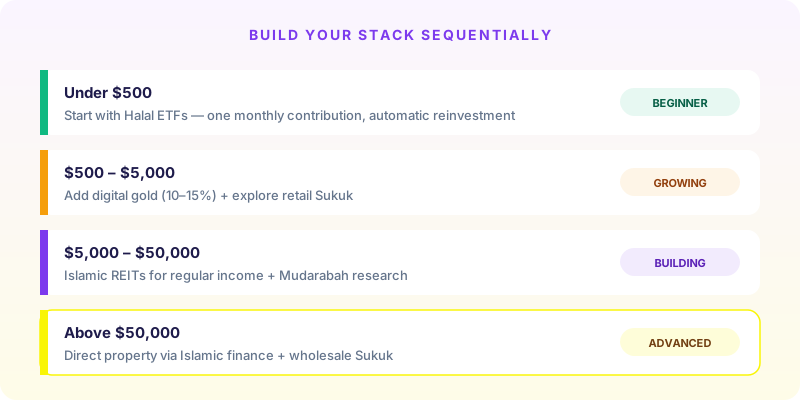
The mistake most people make is trying to do everything at once. The smarter approach is sequential, based on your current capital:
- Under $500: Start with Halal ETFs. One monthly contribution, automatic reinvestment, no complexity.
- $500–$5,000: Add digital gold (10–15% of portfolio) and explore retail Sukuk where available.
- $5,000–$50,000: Consider Islamic REITs for regular income. Begin researching Mudarabah opportunities.
- Above $50,000: Direct property (via Islamic finance) becomes viable. Wholesale Sukuk markets open up. At this level, a dedicated tool like Kimia Pro helps you manage multiple income streams efficiently.
Kimia tracks all of these streams in one dashboard — investments, current value, expected distributions, and their contribution to your annual Zakat calculation. Starting with $100 in a Halal ETF today is better than waiting until you have the perfect strategy. The goal is Halal motion, not paralysis by analysis.
If you are already building wealth and thinking long-term, you should also consider how your assets will be transferred to the next generation. Our guide on Islamic estate planning covers the essentials of Mirath and Wasiyya to protect your family.
Master Your Money the Halal Way
Get weekly tips on ethical investing and financial purification delivered to your inbox.
Share this article
Apply What You Learned
Track your finances, manage Qard al-Hasana, and plan your budget with Kimia.
Try Kimia Free